ServicesConcrete Backyards
Concrete Backyards in Laguna Niguel
We plan and pour whole backyards in concrete. That means tearing out the old slab or lawn, grading so water runs away from your home, adding drains and choosing a finish that fits how you use the space. On older lots, we check what past owners left behind before we price it.
When a full concrete backyard makes sense
A concrete backyard is more than one patio. It is the whole space behind your home laid out at once: a seating area, a path to the side yard, a pad for the grill or a shed, and the slopes and drains that tie it together. Doing it in one job means one grade plan and one set of joints that line up.
It is the right call when the yard is a mix of cracked old slabs, tired lawn and patched spots, or when you are done watering grass nobody sits on. Many homes around Laguna Niguel were built in the 1970s and 80s. Their backyards often have the original slab, a later add-on poured by someone else, and drain pipe nobody has looked at in decades. We find those things before the price is set, not halfway through the job.
What the work includes
Tear-out and haul-off
We break out old concrete, brick borders and sod, and haul it all away. Old slabs sometimes turn out thicker than expected, with mesh or rebar from an earlier pour. We check the edges first so the estimate matches what is really there.
Grading and drainage
We set the slope so water moves away from your home's foundation and toward a drain. If old drain lines are crushed or packed with roots, we show you and put new line and grates in the plan.
Base and steel
Compacted gravel base, then rebar sized for the use. A spa pad or a spot for heavy planters gets more than a walking area.
Layout and joints
Control joints give cracks a place to go. We line them up with doors, steps and the corners of the house so the yard looks planned.
Finish choices
Broom finish, smooth trowel, exposed aggregate, or a pattern from our stamped concrete work. Color can go in the mix or on the surface.
Protection and cleanup
We cover walls, windows and nearby plants with plastic and boards. When we leave, the forms are pulled, debris is gone and the yard is raked out.
Signs your backyard is ready for new concrete
Water pools against the house
Puddles by the back door or a slab that tilts toward the foundation mean the grade is wrong. Getting the slope right takes a new slab, not a patch.
Layers of old patches
Thin toppings, mismatched colors, a strip poured years after the rest. When those start lifting, the base underneath is usually the real problem.
Roots lifting the slab
Trees planted when the house was new can push sections up an inch or more. We plan around the roots or add a barrier, depending on the tree.
Trip spots where slabs meet
Older yards often have three or four slabs of different ages meeting in one place. Each settles at its own rate and leaves a lip that catches feet.
A lawn you never use
Brown grass and a water bill that keeps climbing. Concrete with planting beds cut in gives you room to use with far less upkeep.
How a backyard job runs
- 1
Walk the yard together
We measure and look at slopes, drains, access and the old concrete edges. You tell us how you use the yard. Then you get a written, line-item estimate.
- 2
Permits and layout
If the job needs a permit for drainage or large flatwork, we pull it. We mark the layout with paint or string so you can see it before anything is broken.
- 3
Tear-out and prep
Demolition, haul-off, grading and drain work come first, and the time depends on the size of the yard. Then base, compaction, forms and steel.
- 4
Pour and finish
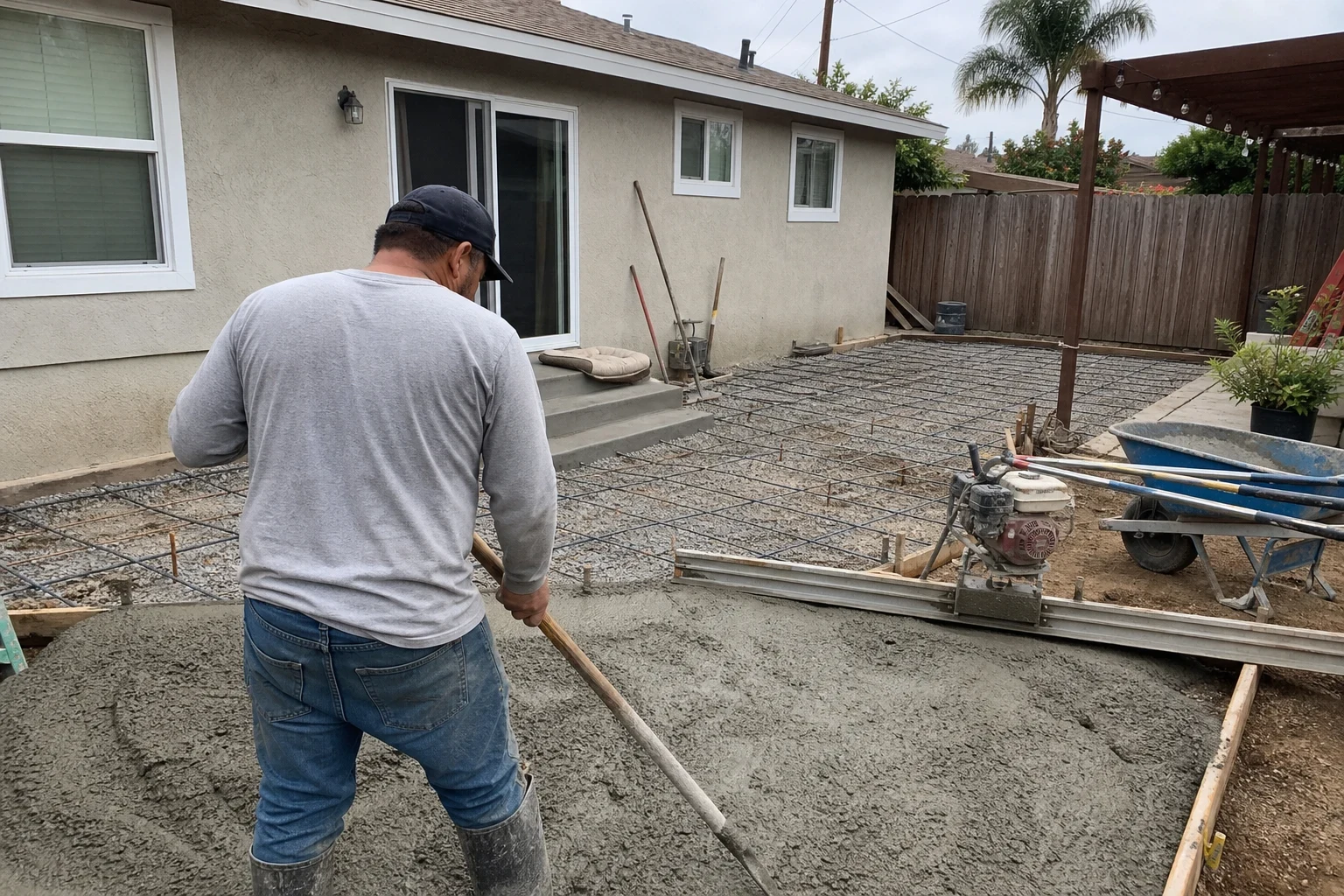
We bring concrete by truck, or by pump if the side yard is tight. We place it, finish it and cut joints the same day.
- 5
Cure and final walk
Stay off it for about a day and keep furniture off for about a week. We pull forms, clean up and walk the finished yard with you.
What sets the price of a concrete backyard
Every backyard is priced on its own. Square footage matters, but so does what is under the old surface and how we get concrete to the back of your home. After we walk the yard, each part goes on a written estimate so you can see where the money goes.
- Size and shape
- More square feet means more material and labor. Curves, planting cutouts and steps between levels add form work.
- What comes out
- Removing old concrete costs more than removing lawn. Thick slabs, rebar and buried footings from old sheds or patio covers take longer to break and haul.
- Access
- If a truck cannot reach the back, we pump or wheel concrete through the side yard. Narrow gates and slopes add time.
- Grade and drains
- Sloped lots and yards that drain toward the house need more grading and new drain lines.
- Finish
- Broom finish is the simplest. Stamped patterns, color and exposed aggregate add material and labor.
Concrete backyard questions
Something not covered here? (949) 312-4765
Can you pour new concrete over my old patio?
Sometimes, but rarely in an older backyard. An overlay keeps the old slope, the old cracks and whatever moved the slab in the first place. If your slab is sound and draining right, we will tell you. Most of the time we recommend tearing out and starting on a proper base.
Will a concrete backyard get too hot?
Light concrete with a broom finish stays cooler than dark pavers. Keeping some planting beds and shade trees in the plan helps too. If the yard has a pool, our concrete pool decks page covers cooler finishes for bare feet.
What happens to the tree roots under my old slab?
We cut roots that can come out safely and leave the big ones that hold the tree up. Where a tree stays close to the new concrete, we can add a root barrier and extra steel at that spot.
What if you hit old sprinkler or drain lines?
Older yards often have pipe nobody mapped. When we find it, we stop, show you, and cap or reroute it before the pour. Any added cost is explained before we do the work, not after.
Do I need to be home the whole time?
No. We need a way into the back, plus water and an outlet. We like to walk the layout with you before demolition and walk the finished yard with you at the end.
Plan the whole yard in one go
Tell us what is back there now and how you want to use it. We will set a time to walk it and put the plan in writing.