ServicesConcrete Courtyards
Concrete Courtyards in Laguna Niguel
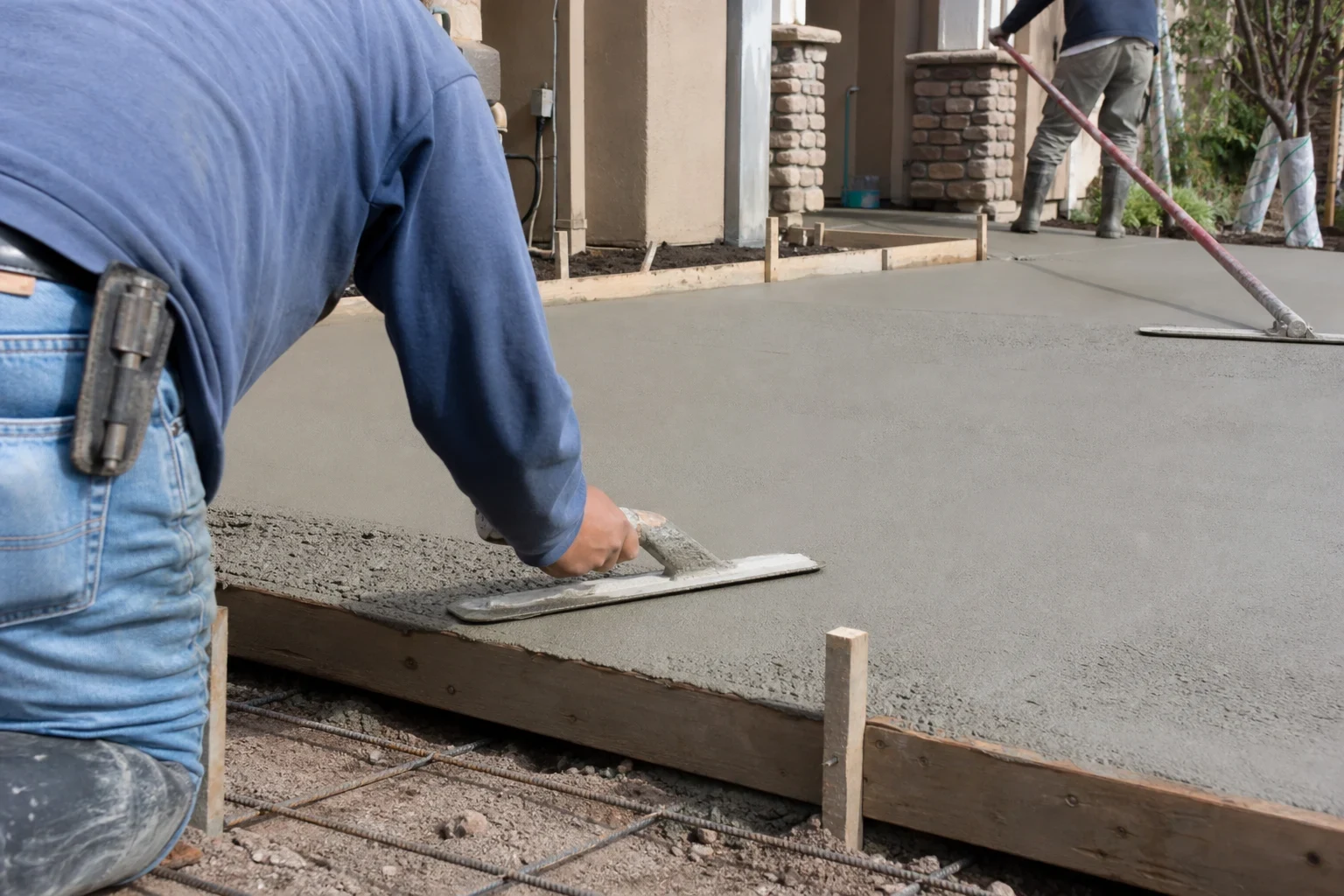
We remove old courtyard concrete and pour a new slab that drains right, sits at the correct height by your doors, and works around the walls and planters already there. You get a clean, level space you can actually use, with a written price before we start.
A courtyard is a small space with a lot going on
A courtyard is boxed in by walls, doors, gates and planters. That makes it harder to pour than an open patio. Water has nowhere to run unless the slab is pitched toward a drain or a gate. The finished height has to sit below door thresholds and weep screeds, or rain ends up against the house.
On older homes we usually find something under the old slab. A clay drain line that cracked years ago. A patch someone poured over a root. A slab that was poured right up to the stucco with no gap. We look for these before we price the job, so you hear about them early instead of halfway through.
If the open area behind the house is your main concern, our Patios and Concrete Backyards pages cover that work.
What a new courtyard includes
Demolition and haul-off
We break out the old concrete, pavers or brick and take it away. In tight courtyards that often means jackhammers and wheelbarrows through a side gate, and we plan for that up front.
Grading and base
We dig to the right depth, compact the soil and lay a gravel base. A lot of local yards sit on clay that swells when wet, so a good base matters more than people think.
Drainage that works
We set the slope so water moves to an area drain, a gate or the yard. If the old drain is crushed or full of roots, we tell you and include the fix in the price.
Steel and joints
We use rebar in the slab and cut control joints where cracks want to form, like inside corners and around planters.
Your choice of finish
Broom finish, smooth trowel, exposed aggregate or a pattern. If you want a stone or tile look, see our Stamped Concrete page.
Cleanup
We protect walls and doors with plastic during the pour, rinse off splatter, and leave the courtyard swept.
Signs your courtyard is due for new concrete
Water pools by the door
Puddles after rain mean the slab has settled or was never pitched right. Over time that water finds its way under the door or into the wall.
Slab tilts toward the house
When the slope runs the wrong way, rain and hose water sit against the stucco. That is a common source of stains and wet wood at the bottom of walls.
Patch on top of patch
Older courtyards often have layers of past fixes in different colors and heights. They trip people and keep breaking loose.
Roots lifting the slab
Trees and big shrubs in courtyard planters push concrete up in ridges. Once the slab is heaved, it will not lie flat again.
The space does not fit how you live
Maybe you want to pave over an old planter, widen the walkway to the gate, or get rid of loose pavers. New concrete is a good time to change the layout.
How a courtyard job runs
- 1
Look and measure
We walk the courtyard with you, check door heights, find the drains and note any past repairs. Then you get a written estimate with each part of the job listed.
- 2
Tear-out and prep
We remove the old surface and look at what is underneath. If we find a broken drain or a buried footing, we show you photos and talk it over before going on.
- 3
Forms, base and steel
We set forms, compact the base, lay rebar and check the slope with a level. If the city needs to see anything, we schedule that inspection.
- 4
Pour and finish
Pour day usually takes most of one day. We place the concrete, finish the surface and cut the joints.
- 5
Cure and hand-off
You can walk on it in a day or two and set furniture on it after about a week. We walk the courtyard with you at the end and go over care.
What sets the price of a courtyard
No two courtyards cost the same, because access and what is under the old slab change a lot from house to house. We price after we see it. Your estimate lists each item so you can see where the money goes.
- Access
- If everything has to go through a narrow side gate by wheelbarrow, demo and pour take longer. A pump truck can help but adds cost.
- What comes out
- Thick old concrete, layers of patches, or brick set in mortar take more time to break out and haul away than a thin slab.
- Drainage work
- A new area drain, or replacing an old cracked line, adds material and labor. It is often the part that saves the most trouble later.
- Size and shape
- Curves, planters and lots of inside corners mean more forming and more joints than a simple square.
- Finish
- A plain broom finish costs the least. Color, exposed aggregate and stamped patterns add steps and material.
Courtyard questions we get
Something not covered here? (949) 312-4765
Can you pour new concrete right over my old courtyard slab?
Usually not. Pouring over it raises the height toward your door thresholds and keeps the old drainage problems. We tear it out so the new slab sits at the right level with the right slope.
What happens if you find a problem under the old concrete?
We stop, take photos and show you what we found. Then we explain the options and what each one costs before we go further. You decide; we do not just add it to the bill.
Do I need to be home during the work?
Not the whole time. We need access through the gate, and it helps if you are around on pour day in case a question comes up. Your doors to the courtyard should stay closed while we work.
Will the new concrete crack?
Concrete can get small cracks as it shrinks. We cut control joints so those cracks land in straight lines where they are hard to see, and we use rebar and a compacted base to keep the slab from moving.
Can you change the layout, like filling in a planter?
Yes. We can fill old planters, widen paths or square off odd shapes. We just make sure water still has a way out, since a planter often soaks up runoff that will now need a drain.
Ready for a courtyard you can use again
Tell us what is going on with the space now and what you want from it. We will set a time to come look, measure and write it up.