ServicesConcrete Side Yards
Concrete Side Yards in Laguna Niguel
That narrow strip between your house and the fence takes a beating. We pour side yard concrete that slopes water away from the walls, gives you a firm path for bins and wheelbarrows, and accounts for the old drain lines and past patch jobs older houses tend to hide.
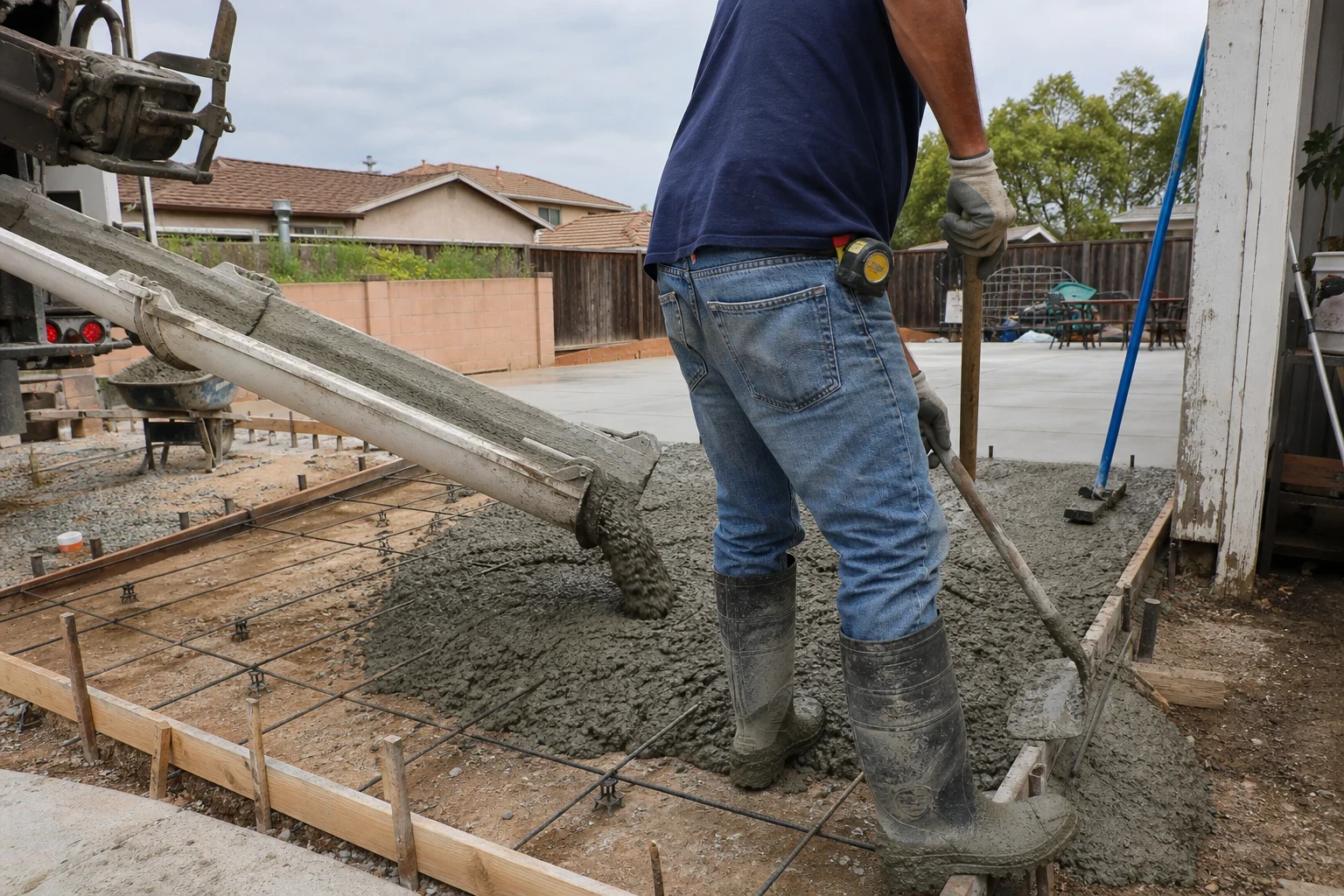
What a Side Yard Pour Fixes
Most side yards start as dirt, gravel or a few stepping stones. Over time they turn into mud after rain, grow weeds and send water back toward the house. A concrete side yard gives you one solid surface from the front gate to the back, pitched so water runs where it should.
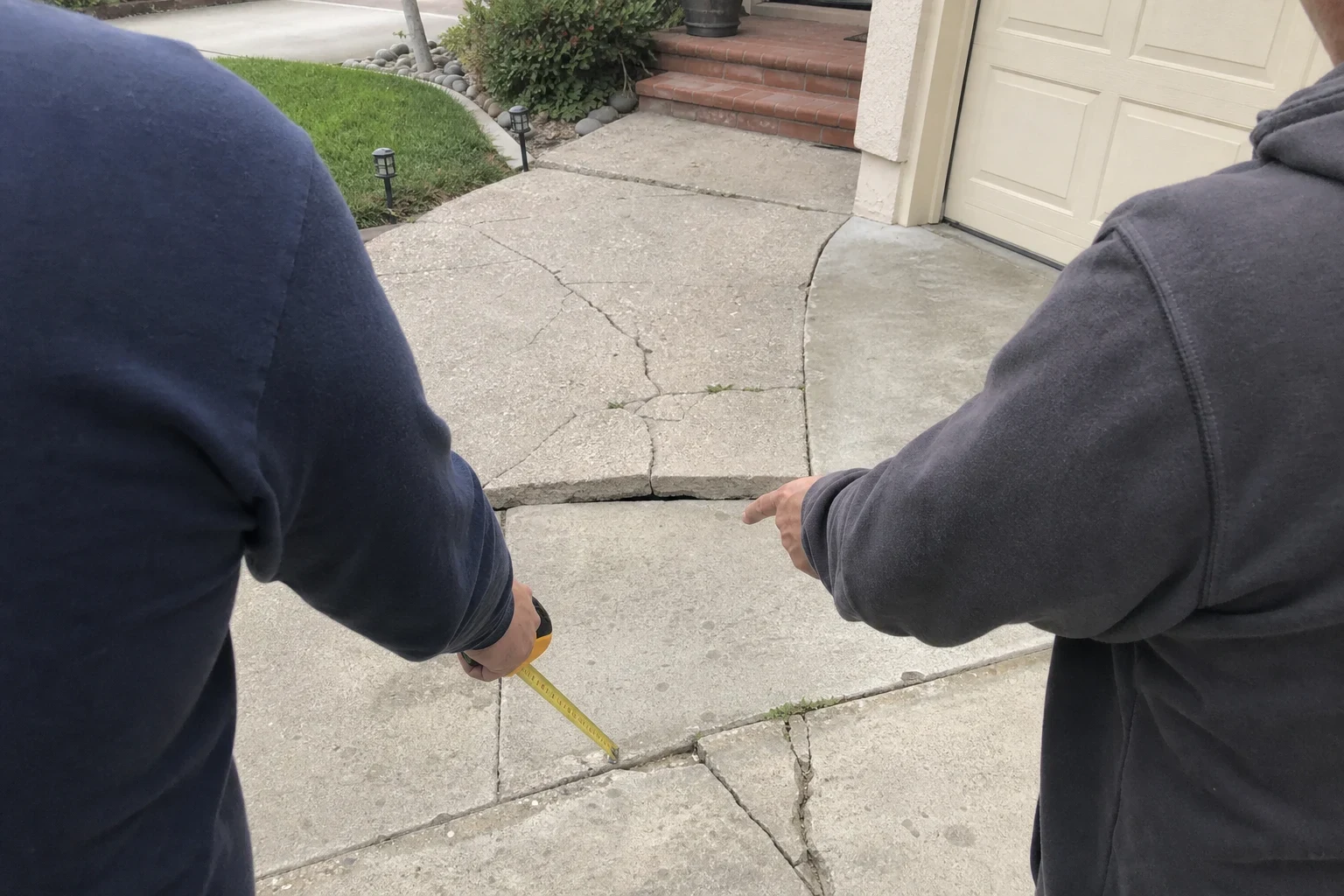
The tricky part is what's already there. On older houses we often find a clay drain pipe that's cracked, a buried hose bib line, an old AC pad, or a strip of concrete someone poured years ago with no slope at all. We look for those first, show you what we found, and plan the pour around them.
What the Work Includes
- Removal of what's there now
- We dig out gravel, pavers, stepping stones or old concrete and haul it away. Then we cut down to the right depth so the new slab sits low enough.
- Slope away from the walls
- We set forms so the finished surface falls away from the foundation. Water heads to the fence line or into a drain, not into your crawlspace or slab edge.
- Clearance at the stucco
- Stucco walls have a metal weep screed at the bottom that needs open space below it. We keep the concrete low enough to leave that gap so moisture can get out of the wall.
- Area drains and outlets
- If the yard is flat or boxed in, we can set area drains in the slab and run pipe to an outlet. On older houses we check the existing line before tying anything into it.
- Base, reinforcement and joints
- We compact the base, add reinforcement and cut control joints at close spacing. Long, narrow slabs want to crack across their width, so joints give them a straight place to do it.
- Cleanup
- We rinse the walls and fence where concrete splashed, pull the forms and leave the side yard swept.
Signs It's Time to Pave the Side Yard
Standing water after rain
If puddles sit against the house for a day, the ground is sloped wrong. That water ends up near the foundation.
Dirt piled up on the stucco
Soil or mulch touching the wall above the weep screed traps moisture. Paving lets us reset the grade lower.
Trash bins that won't roll
Wheels sink in gravel and mud. A smooth path makes the trip to the curb easy.
An old slab that pitches toward the house
Some older side yards were poured flat or tilted the wrong way. When that's the case, replacing it is the honest answer.
Weeds you fight every season
Gravel and bare dirt keep growing weeds no matter how much you pull. Concrete ends that chore.
What Moves the Price
Side yards look small, but they're often the hardest spots on a lot to reach. The price comes down to how much concrete, how we get it there and what we find under the old surface. We'll walk you through each line on the estimate.
Length and width
More square footage means more concrete, forming and finishing time.
Access
A narrow gate or no truck access means a pump or many wheelbarrow trips. Both add labor.
Removal and haul-off
Breaking out an old slab costs more than scraping gravel. Thick or reinforced old concrete takes longer.
Drainage work
Area drains, new pipe or replacing a cracked old line add to the job but often matter most in a side yard.
Grade and soil
If we have to dig the grade down to clear the weep screed or bring in base over soft soil, that shows up in the price.
How a Side Yard Job Runs
- 1
Walk the yard with you
We measure, check the slope, find the hose bibs, meters and drains, and look at the stucco line. You get a written estimate that lists each part of the job.
- 2
Demo and prep
We clear the strip, dig to depth and compact the base. If we turn up an old pipe or a past repair, we stop and show you before we go on.
- 3
Forms, drains and steel
Forms go in with the slope built in. Drains and reinforcement are set, and we walk you through the layout before the pour.
- 4
Pour and finish
Narrow yards usually mean a pump hose or wheelbarrows through the gate. We place, level and finish the concrete, then cut the joints.
- 5
Cure and hand-off
Foot traffic is fine after a day or two. We tell you when bins and heavier loads can go back on it.
Side Yard Questions We Hear
Can you pour right up against the house?
Yes, with an expansion joint between the slab and the foundation. We also keep the top of the concrete below the stucco weep screed so the wall can dry out. That usually means digging the grade down a bit first.
What happens to my existing drain pipe?
We find it before we pour. If it's an old clay or thin plastic line that's cracked or full of roots, we'll show you and talk through replacing it while the ground is open. Once concrete is over it, getting to it is much harder.
Do I need a permit for a side yard slab?
Plain flatwork often doesn't need one, but drainage tie-ins or work near property lines can change that. We'll tell you what applies to your job and handle it if it's needed.
Will the concrete crack?
Concrete can crack, especially on the clay soils common around here. We control where it happens with a compacted base, reinforcement and joints spaced close on a narrow slab, so any cracks fall in the cut lines.
Can it match my driveway or patio?
Usually, yes. We can do a broom finish to match plain concrete or tie it into stamped concrete or a patio we're pouring at the same time.
Ready to Get Rid of the Mud Strip
Tell us how long the side yard is, what's on it now and where the water goes when it rains. We'll set a time to come look and give you a written estimate.