ServicesDriveways
Concrete Driveways in Laguna Niguel
We tear out tired driveways and pour new ones that drain right and hold up to daily parking. On older lots we check what's under the old slab first, so your new concrete isn't sitting on the same problem that ruined the last one.
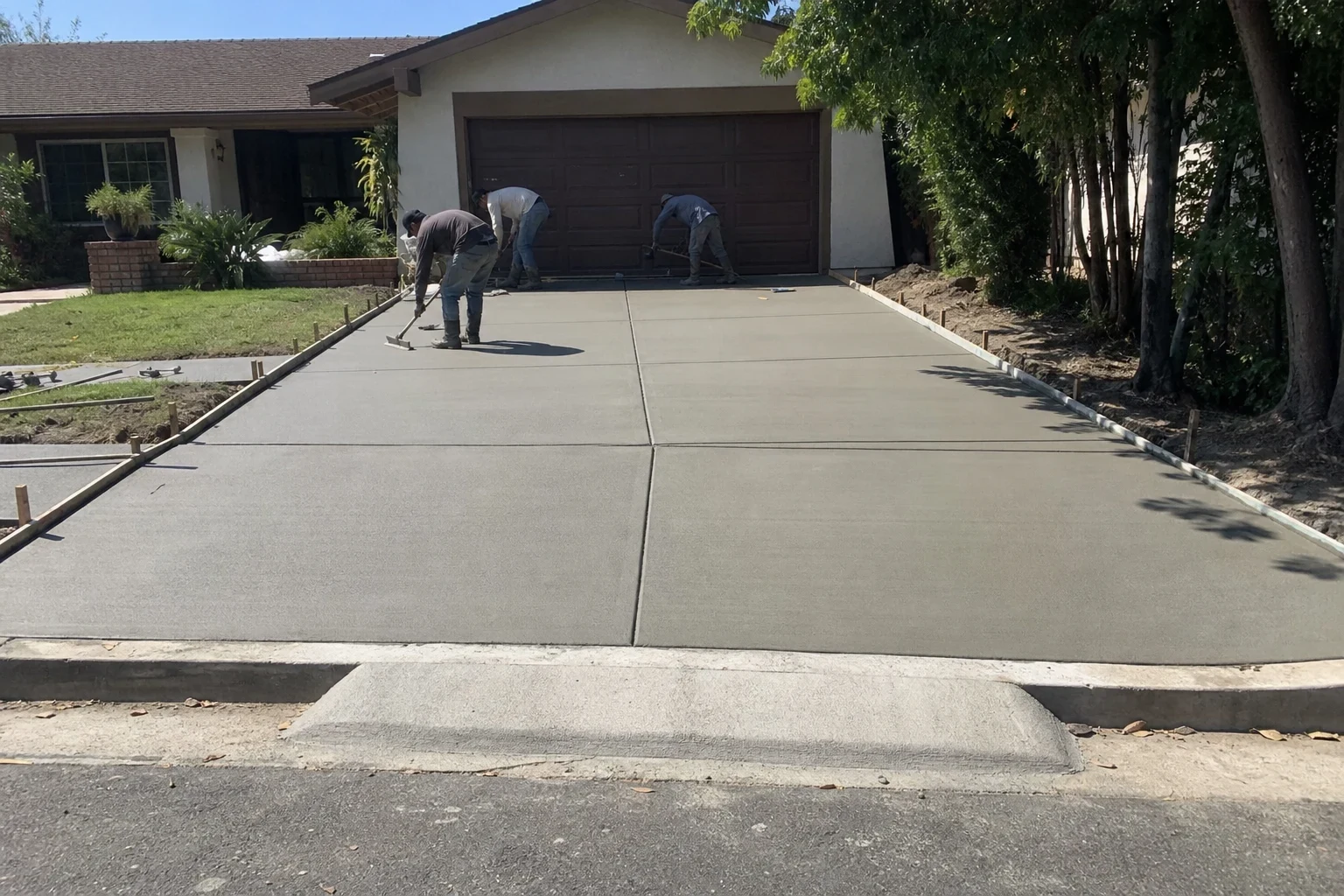
A new driveway starts with what's under the old one
Most driveways we replace didn't fail on the surface. They failed underneath. Thin base rock, clay soil that swells when wet and shrinks when dry, tree roots, or a slope that sends water under the slab instead of off it.
Older driveways often carry past fixes too. A strip of newer concrete where a sewer line was dug up. Asphalt packed into a sunken corner. A section poured with no steel at all. We find those during tear-out, show you what we found, and set the new base to match what the ground actually needs.
A full replacement is the right call when cracks run the width of the slab, sections have dropped or lifted, or the surface is breaking apart. If a new pour isn't what your driveway needs, we'll tell you that on the first visit.
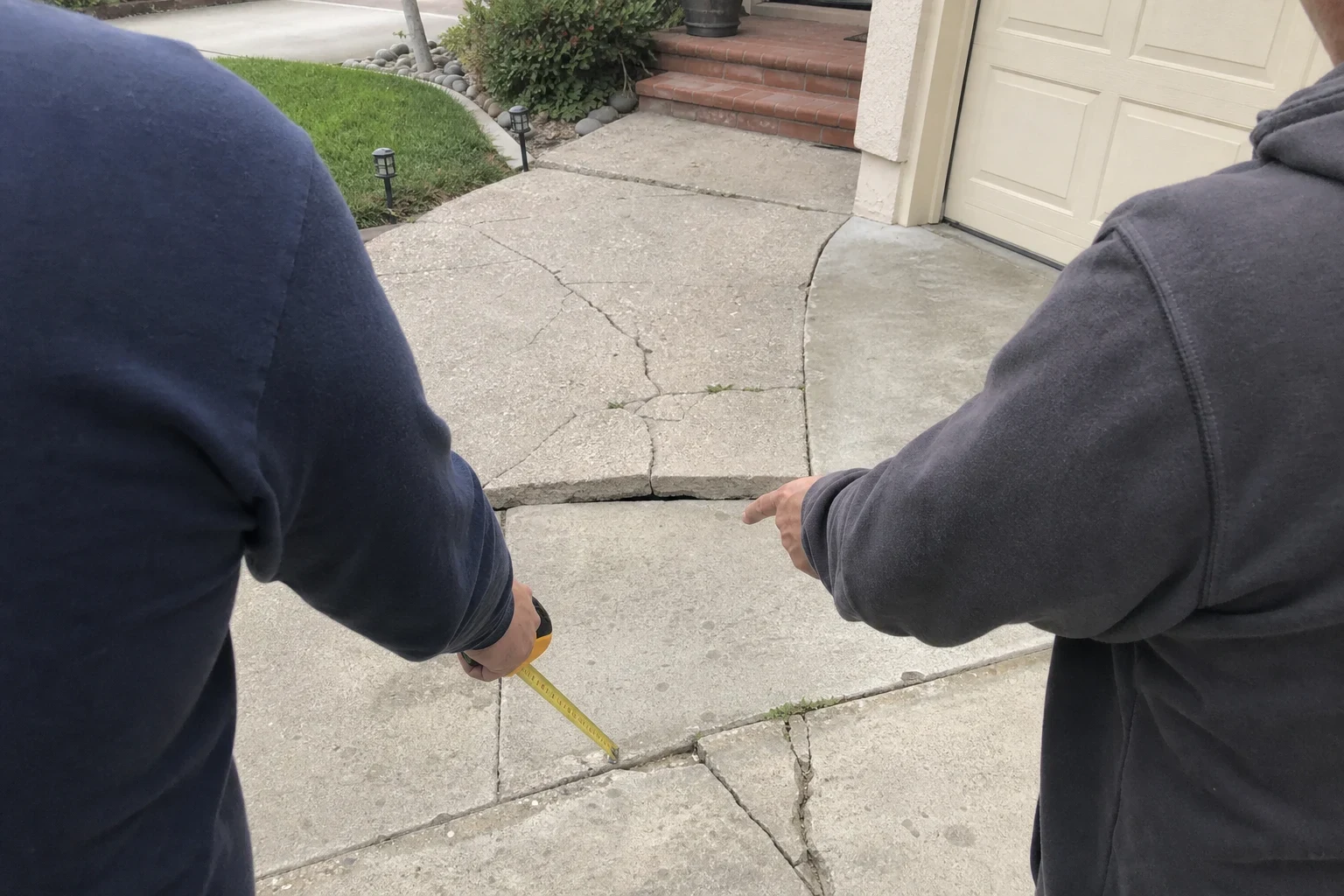
What a driveway job includes
- 01
Tear-out and haul-off
We break up the old concrete and remove it, along with any buried asphalt, old base or stray debris. It all leaves on our trucks. The street and gutter get swept at the end of each work day.
- 02
Grading and new base
We set the grade so water runs to the street or a drain, not toward your garage door. Then we lay fresh base rock and compact it in layers.
- 03
Rebar and control joints
Steel sits on chairs so it ends up in the middle of the slab, not pressed into the dirt. Joints are placed at a spacing that tells cracks where to go.
- 04
Apron and tie-ins
The apron at the curb usually needs a city permit, and we pull it. We also tie the new slab neatly into your garage floor and any walkways that meet it.
- 05
Finish choices
A broom finish is the standard because it grips in the rain. We can add a border or a section of stamped concrete if you want the driveway to match a patio or entry.
Questions about Driveways?
Call(949) 312-4765Signs it's time for a new driveway
Cracks that cross the whole slab
Hairline cracks are normal. Cracks that run edge to edge and keep widening mean the base has moved.
Sunken or lifted sections
A slab that drops at the garage or heaves near a tree leaves a trip edge and a bump under your tires. Roots and washed-out base are the usual causes.
Water heading the wrong way
Puddles that sit for days, or runoff that flows toward the garage, point to a slope that was never set right.
More patch than driveway
When half the surface is old fills in different colors, you're paying to keep a failed slab going.
Flaking or crumbling surface
Scaling and loose gravel on top usually mean a weak mix or a bad finish from the start. It won't get better.
How the job runs
- 1
Phone call and walk-through
You call, and we set a time to walk the driveway with you. We look at slope, drainage, crack patterns and anything that hints at old repairs or roots. You get a written estimate with each part listed.
- 2
Permits and utility marks
We pull any permit the apron or curb work needs. Before digging, underground utilities get marked so nobody hits a line.
- 3
Tear-out and base day
This is the loud day. Park on the street the night before. We remove the old slab, fix soft spots, grade and compact the base, then set forms and steel.
- 4
Pour and finish
Concrete goes in, gets leveled and finished, and joints are cut. We clean up the edges and the street before we leave.
- 5
Cure time
You can walk on it in a day or two. Plan on about a week before you drive on it, and we'll tell you what to watch for while it cures.
What moves the price of a driveway
Every driveway is priced on its own. Size is the starting point, but what's under the old slab and how easy it is to get equipment in matter just as much. Your estimate lists each part so you can see where the money goes.
- Size and thickness
- Square footage drives the amount of concrete and steel. A slab that has to carry a heavy truck or trailer gets poured thicker.
- What comes out
- Thick old concrete, buried asphalt or layers of past patches take more time to break and more loads to haul.
- Slope and access
- Steep drives need more forming and careful grading. Tight access can mean pumping concrete instead of pouring straight from the truck.
- Finish and extras
- Broom finish costs the least. Stamped sections, colored borders or added drains add to the job.
- Permits and apron work
- Work at the curb or sidewalk often needs a city permit and inspection, and that shows up as its own line.
Driveway questions we hear
Can you just pour new concrete over my old driveway?
We don't recommend it. It raises the height at the garage and the curb, and cracks in the old slab tend to show through the new one. Tearing out and starting on a good base costs more up front but lasts.
How long will I be without my driveway?
Tear-out through pour usually takes a few working days, depending on size and weather. After that, plan on about a week before you park on it. You can walk on it much sooner.
Will my new driveway crack?
Concrete shrinks as it cures, so small cracks can happen. Proper base, steel and joint spacing keep them thin and in the joints where they belong. What you shouldn't see is the wide, uneven cracking that comes from a bad base.
Do I need a permit for a driveway?
Work on the apron or near the curb usually does. We pull the permit and schedule any inspection, so you don't have to deal with the city yourself.
Can the driveway match my walkway or patio?
Yes. We can match a broom finish, add a stamped border, or pour new walkways and sidewalks at the same time so it all ties together.
Ready to replace a worn-out driveway
Tell us what your driveway is doing now and we'll set a time to look at it. We pour driveways in Laguna Niguel and nearby towns like Mission Viejo and Aliso Viejo.