ServicesRV Parking Pads
Concrete RV Parking Pads in Laguna Niguel
We pour RV pads thick enough to carry a motorhome or a loaded trailer, on a compacted base with steel in the slab. Before we dig, we look for what older lots tend to hide: old sprinkler lines, buried drains and past patch work that can undercut a new pad.
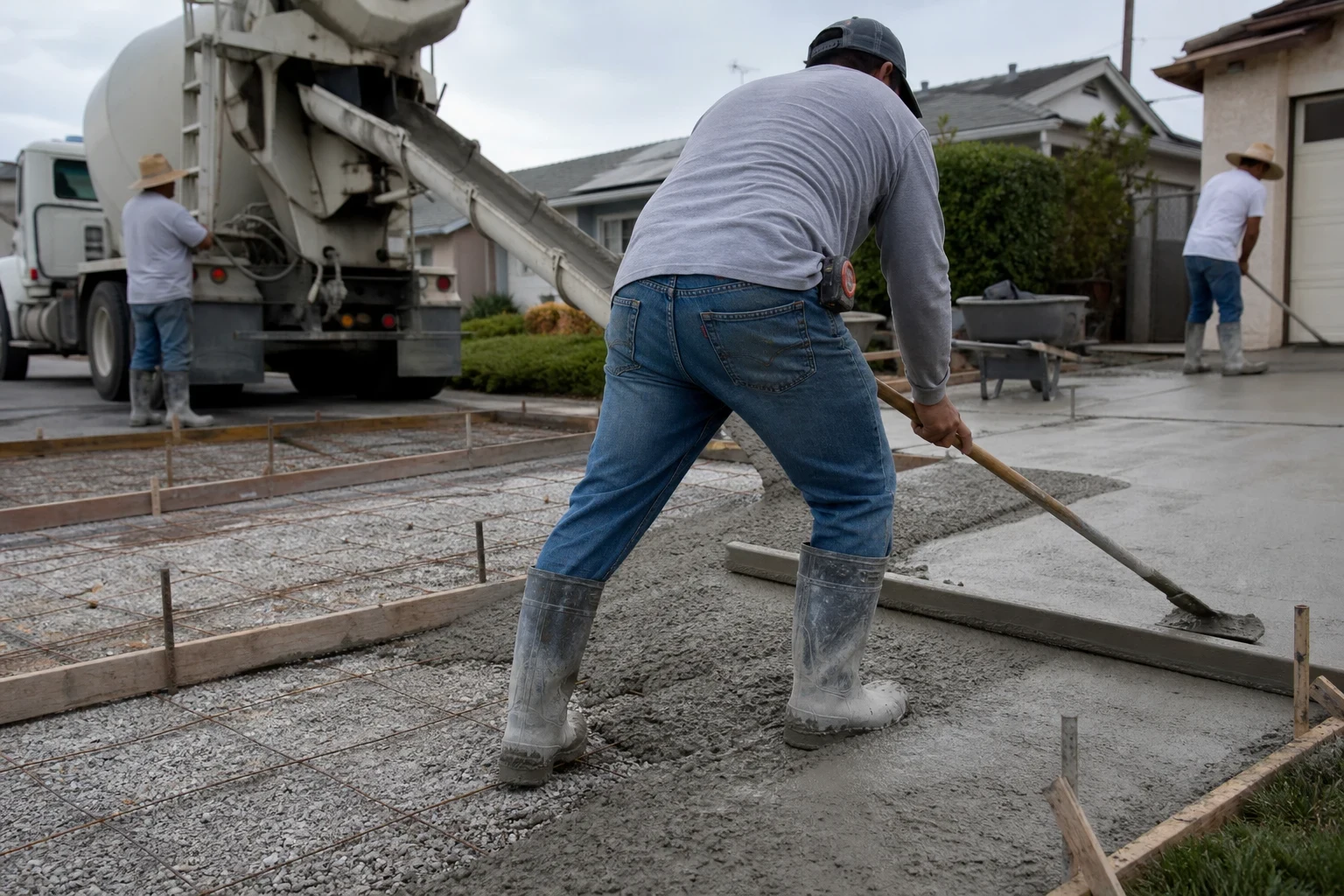
A pad that carries the weight for years
An RV is not a car. A motorhome can put several tons on each axle, and that weight sits in the same spot for months. A thin slab over loose fill will crack, settle and tip. So we build an RV pad like a heavy-duty slab: more thickness, a well-compacted base and rebar tied on a grid.
On older properties the side yard or strip of lawn where the RV will go often has a history. Someone ran irrigation through it, buried a downspout line or poured a thin walkway decades ago. We find those things first and deal with them before any concrete goes in.
If you also need the driveway widened or a matching walk to the gate, we can plan that work together with the pad so the grades line up.
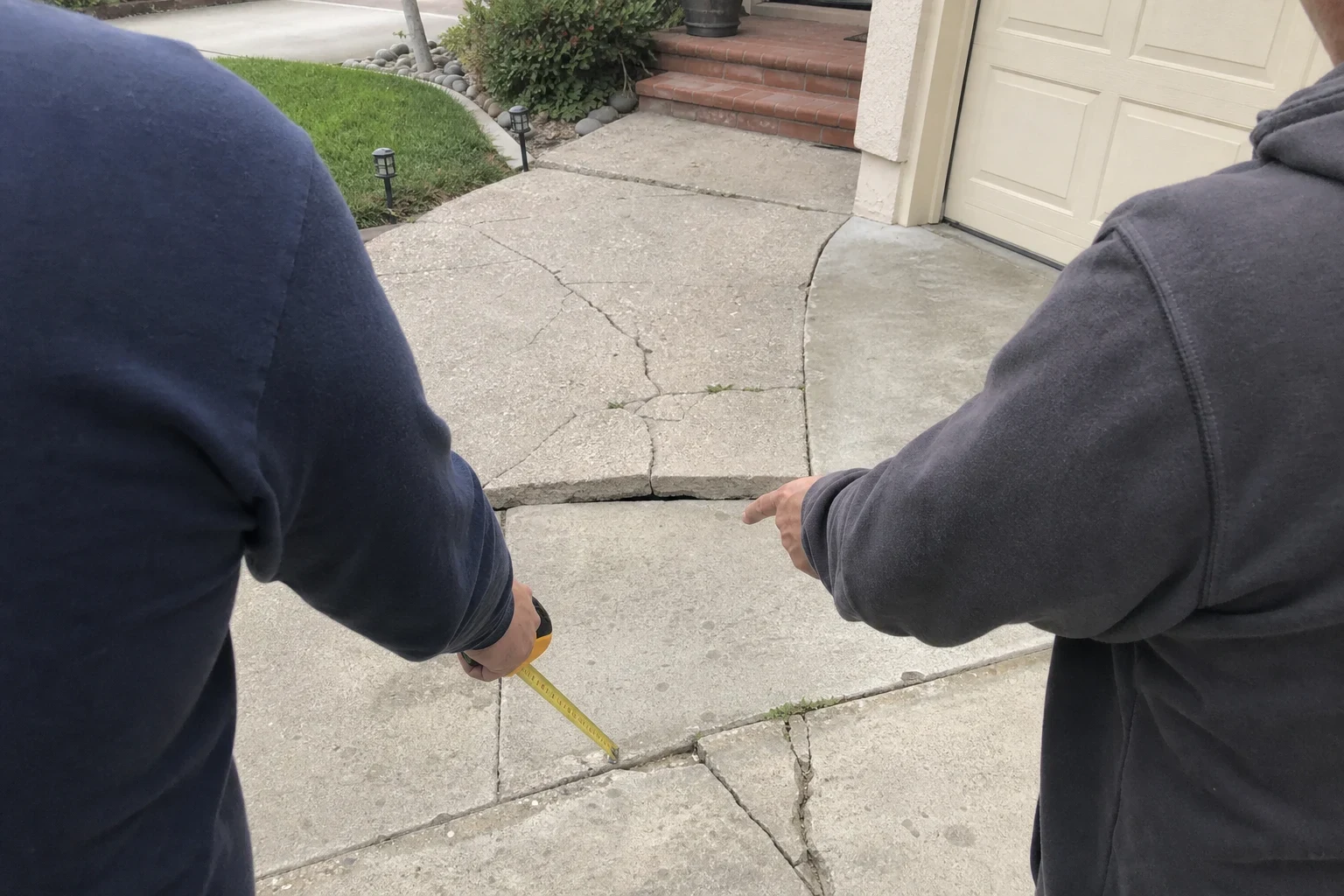
What the job includes
- 01
Site check and layout
We measure your rig, the turn from the street and the gate width. Then we mark the pad so you can actually back in and open the doors and slide-outs.
- 02
Demo and haul-off
We break out old lawn, gravel, pavers or thin concrete in the way and haul it off. You are not left with a pile in the yard.
- 03
Finding old lines
Older yards often have sprinkler pipe, drain lines or low-voltage wire right where the pad goes. We locate them, reroute or cap them, and show you what we found before we cover it.
- 04
Base and reinforcement
We grade and compact a gravel base, then set rebar on chairs so it sits in the middle of the slab where it does its job. Many south Orange County lots have clay soil that swells when wet, and a good base keeps that movement from reaching the concrete.
- 05
Pour, finish and joints
We pour at a thickness meant for heavy loads, give it a broom finish for traction and cut control joints so any cracking stays in straight lines.
- 06
Drainage
The pad gets a slight slope away from your home and toward a spot where water can go. On a narrow side yard that may mean a channel drain along one edge.
Questions about RV Parking Pads?
Call(949) 312-4765Signs it is time for an RV pad
Ruts in the lawn or gravel
If your tires leave tracks or sink after a rain, the ground is not holding the weight. It will only get worse.
Cracks under where you park
An old driveway or walkway that was never built for an RV will crack and sink at the tire spots. A new pad built for the load is the fix.
The rig sits out of level
When you need extra blocks every time you park, the surface has moved. That puts stress on the frame and makes slide-outs harder to run.
Water pools around the tires
Standing water rots tires and invites rust. A sloped slab sheds it.
You are bringing home a new rig
A longer or heavier trailer than the last one may not fit the space you have. It is easier to size the pad right before the RV arrives.
How the work goes
- 1
Walk the site
We come out, look at the space, the access and the soil, and ask about your rig. If your home is in an HOA, we talk about what the rules may require before anything is planned.
- 2
Written estimate
You get a line-item estimate that spells out thickness, steel, base, demo and drainage. If the city needs a permit for a wider curb cut or approach, we tell you up front and pull it.
- 3
Prep day
We dig out, deal with old lines, set forms, compact the base and tie the steel. This is the day that decides how long the pad lasts.
- 4
Pour day
Concrete arrives, we place it, finish it and cut joints. We protect nearby walls, plants and your driveway, and clean up before we leave.
- 5
Cure, then park
You can walk on it in a day or two. We ask you to keep the RV off for about a week or more so the slab gains strength first.
What sets the price
Every RV pad is priced on its own site. Size is a big part of it, but what is under the ground and how we get the truck to the spot matter just as much. We put each piece in writing so you see where the money goes.
- Size and thickness
- A longer pad for a big motorhome uses more concrete and steel than a short one for a small trailer. Heavier loads call for a thicker slab.
- Access
- If the mixer can back up to the forms, the pour is straightforward. Tight side yards may need a pump or wheelbarrows, which adds labor.
- What we have to remove
- Old concrete, pavers or deep roots take time to break out and haul away. Old irrigation or drain lines that need rerouting add to it too.
- Soil and base work
- Soft or expansive soil needs more digging and more base material. We check this on the walk-through so it does not become a surprise.
- Permits and drainage
- A wider driveway approach or a channel drain adds cost. We tell you when either is needed and why.
RV pad questions
How thick should an RV pad be?
It depends on the weight of your rig and the soil. Most RV pads need to be thicker than a standard driveway, with rebar instead of just wire mesh. We set the thickness after we know what you are parking and what the ground is like.
Can you pour it next to my existing driveway?
Yes. We tie it in with dowels or an expansion joint so the two slabs move without cracking each other. We also match the height so there is no lip to roll over.
Do I need a permit or HOA approval?
A pad in your own yard often needs no city permit, but widening the curb cut usually does. Many HOAs have rules on where an RV can sit. We tell you what we know and pull any permit the work needs; HOA approval is something you request from your board.
What if you find old pipes where the pad goes?
It happens a lot on older lots. We stop, show you what we found and explain the options, usually rerouting or capping the line. Nothing gets buried under new concrete without you knowing.
How long before I can park the RV on it?
Plan on about a week before light use, and longer for a heavy motorhome. Concrete keeps gaining strength for weeks. We give you a date based on the mix and the weather.
Ready to get the RV off the lawn
Tell us what you drive and where you want it. We will come look at the space, check what is under the ground and walk you through a written estimate.