ServicesWalkways and Sidewalks
Walkways and Sidewalks in Laguna Niguel
We pull out old, uneven walks and pour new concrete on a base built to stay flat. On older properties we dig down to find what earlier crews left behind, so your new path doesn't heave or crack over the same old problem.
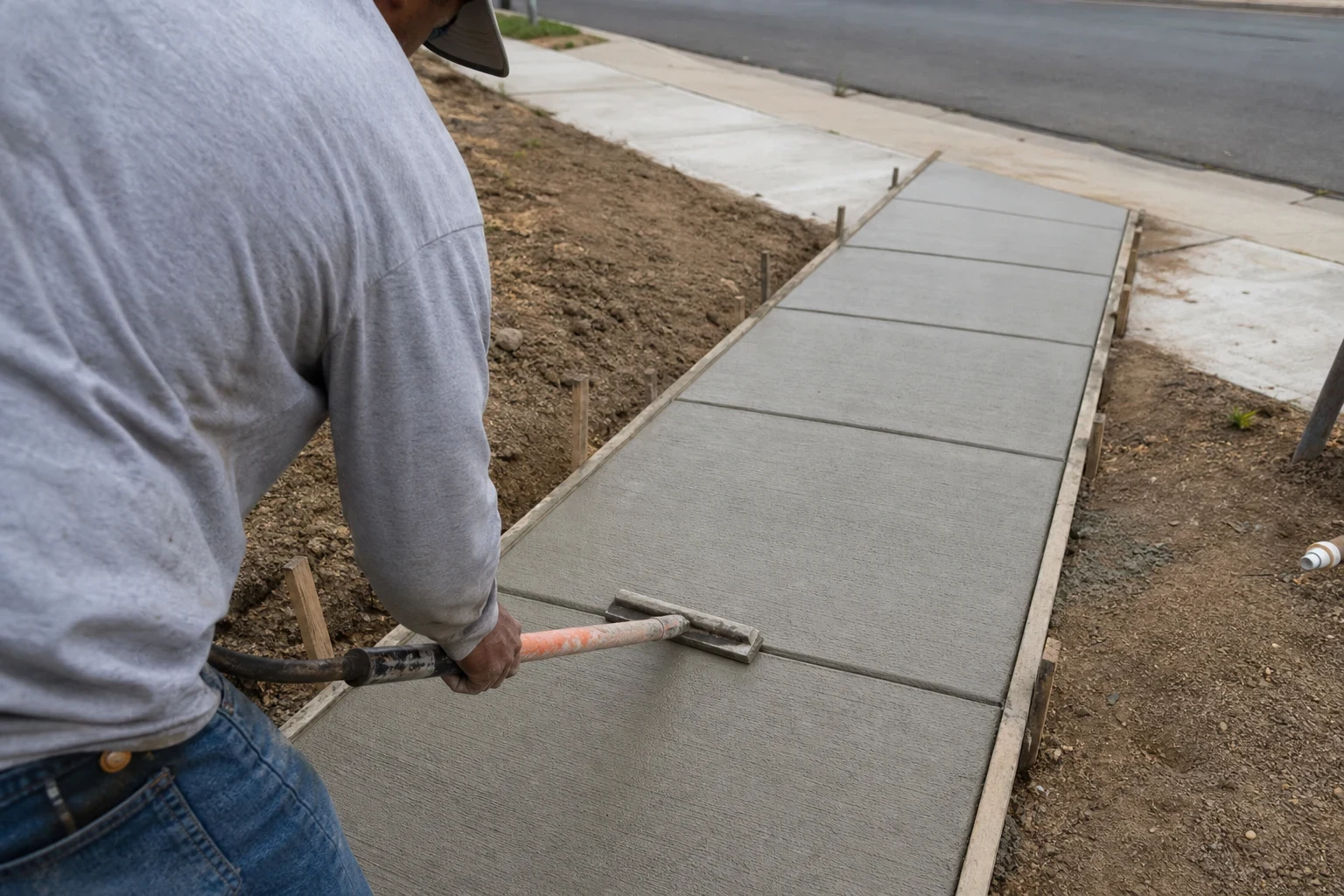
A path you can walk without watching your feet
A walkway takes more abuse than it looks. People, bikes, trash cans and rain all use it every day. When the base under it was thin or never compacted, the slabs tip, settle and open up at the joints.
Older homes add a few more twists. We often find a second slab poured over the first, old patches in a different color, buried roots from a tree long gone, or a walk that slopes back toward the house. We plan for those before we pour, not after.
New concrete is the right call when sections have lifted, sunk or broken into pieces, or when the walk no longer drains away from your home. If you also want new steps, a side yard path or a stamped finish, we can lay it out as one job.
What the work includes
- 01
Full tear-out and haul-away
We break out the old walk down to the soil and haul it off. That includes any older layer hiding underneath, which is common on homes that have been through a few owners.
- 02
Base prep and compaction
We grade the soil, add base rock where it's needed and compact it in lifts. This step decides how long the walk stays flat.
- 03
Slope and drainage
We set the forms so water runs off the walk and away from your foundation. A quarter inch per foot is a typical target.
- 04
Reinforcement and joints
We add rebar or wire where the soil and use call for it. Control joints go in at planned spacing, so any cracking happens in a straight line where you can't see it.
- 05
Finish and edges
A light broom finish gives grip when it's wet. Edges get tooled smooth. If you want a pattern, our stamped concrete page covers those options.
- 06
Cleanup
We protect plants and nearby surfaces during the pour and leave the area swept when we go.
Questions about Walkways and Sidewalks?
Call(949) 312-4765Signs your walkway is due for replacement
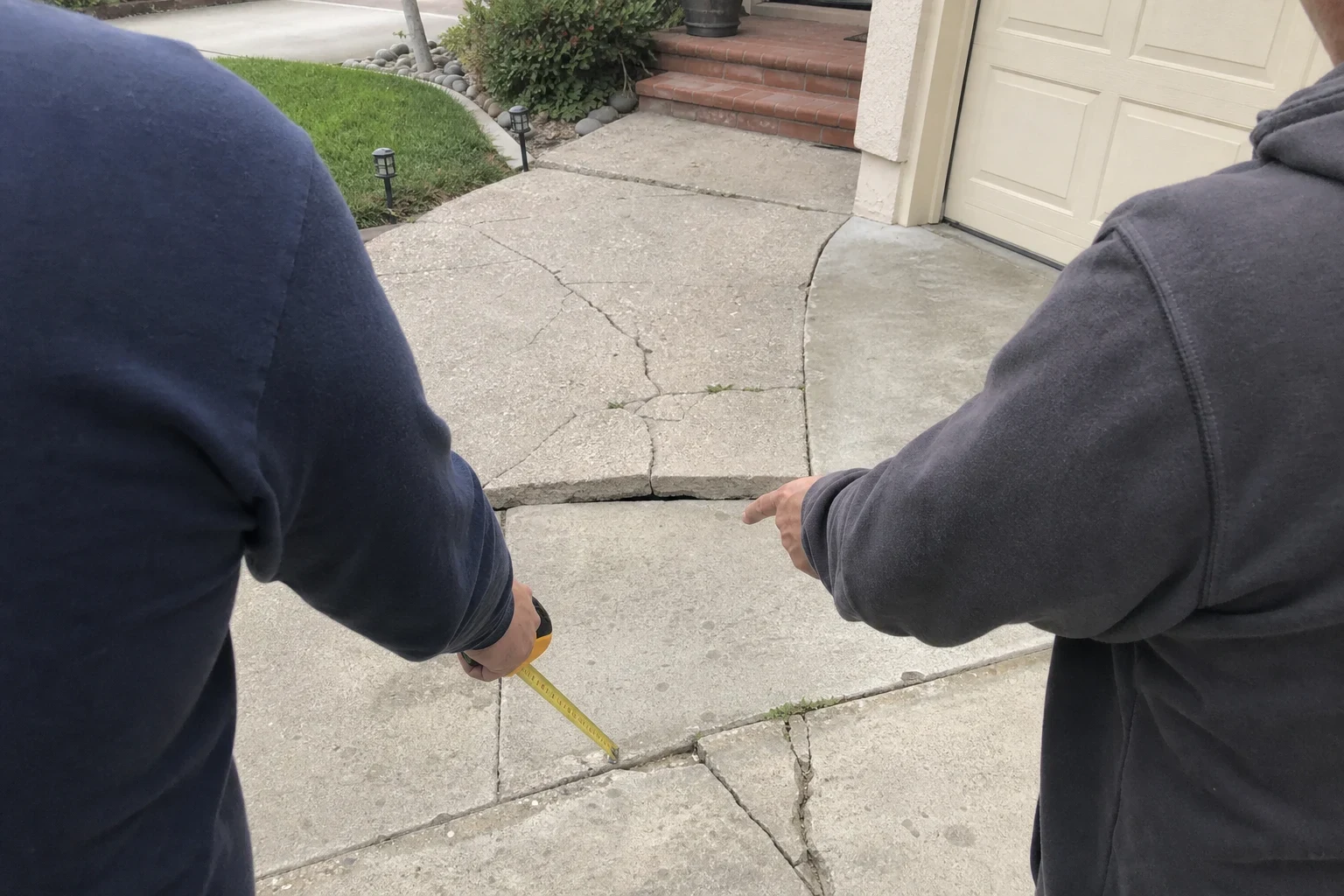
Lifted edges you trip on
Even a half-inch lip catches a toe. Roots or swelling clay soil usually cause it, and the slab won't settle back down on its own.
Sunken or tilted slabs
A slab that dropped means the ground under it washed out or was never packed. Water tends to pond there after rain.
Patches on top of patches
Mismatched gray squares or a thin skim coat point to earlier quick fixes. They usually flake off and hide what's going on below.
Water running toward the house
If rain sits against your foundation or flows to the front door, the walk has the wrong slope. Replacing it lets us correct that.
Cracks that keep widening
Hairline cracks are normal. Cracks you can fit a coin in, or ones that grow each year, mean the slab has lost support.
How a walkway job goes
- 1
Look and measure
We walk the path with you, check slope and drainage and note roots, old layers and utility lines. Then we give you a written, line-item estimate.
- 2
Demo day
We saw clean lines where the new walk meets anything staying, break out the old concrete and haul it away. Surprises underneath get photographed and talked over with you before we go on.
- 3
Base and forms
We grade, compact and set forms to the right slope and width. Rebar or wire goes in next.
- 4
Pour and finish
We place the concrete, cut joints, tool the edges and broom the surface. A typical walk is poured and finished in one day.
- 5
Cure and clean up
We keep the slab damp and protected while it cures, clean the site and tell you when it's ready for foot traffic and when it can take heavier loads.
What moves the price
Every walk is priced on its own measurements and conditions. Your estimate shows each part line by line, so you can see where the money goes. These are the things that change the number most.
- Length and width
- More square footage means more concrete, base rock and labor. A wider walk costs more but feels much easier to use.
- What comes out first
- Thick slabs, a buried second layer or big roots take more time to remove and haul. On older homes this is often the biggest unknown, which is why we check before we price.
- Access
- If the truck can't reach and we have to wheel concrete through a narrow side yard, the job takes longer.
- Finish and extras
- Broom finish is the simplest. Stamping, color, borders or adding a few concrete steps add cost.
- Permits
- Work on the public sidewalk out front usually needs a city permit and inspection. Private walks inside your property line often don't.
Walkway and sidewalk questions
How soon can we walk on the new concrete?
Light foot traffic is usually fine after a day or so. Cooler, damp weather can stretch that a bit. We'll tell you the timing for your pour, and when it can handle carts or heavier loads.
Can you replace the public sidewalk in front of my house?
Often, yes. Sidewalks in the public right-of-way usually need a city permit and have set rules for width, thickness and slope. We check those rules first and build to them.
Will tree roots just push the new walk up again?
Roots near the path get cut back where it's safe for the tree, and we can add a root barrier along the edge. A well-compacted base with rebar also resists lifting much better than the thin slabs we often take out.
Why not just pour over the old walkway?
Pouring over old concrete raises the height, can cover up drainage problems and copies every crack below it. On older homes we frequently find that someone already did this once. Taking it all out is the way to get a walk that stays flat.
How long does the whole job take?
Most walkways take a few days from tear-out to cleanup. Longer paths, tricky access or a permit inspection can add time. You'll get a schedule with your estimate.
Ready for a walkway that stays put
Tell us about the path, the trouble spots and anything a past owner may have done. We'll set up a time to look and measure.