ServicesConcrete Slabs
Concrete Slabs in Laguna Niguel
We pour new concrete slabs for sheds, spas, AC units, trash bins and plain flat work areas around your home. On older properties we dig out the old slab, find what past owners left behind, and build a firm base before any concrete goes down.
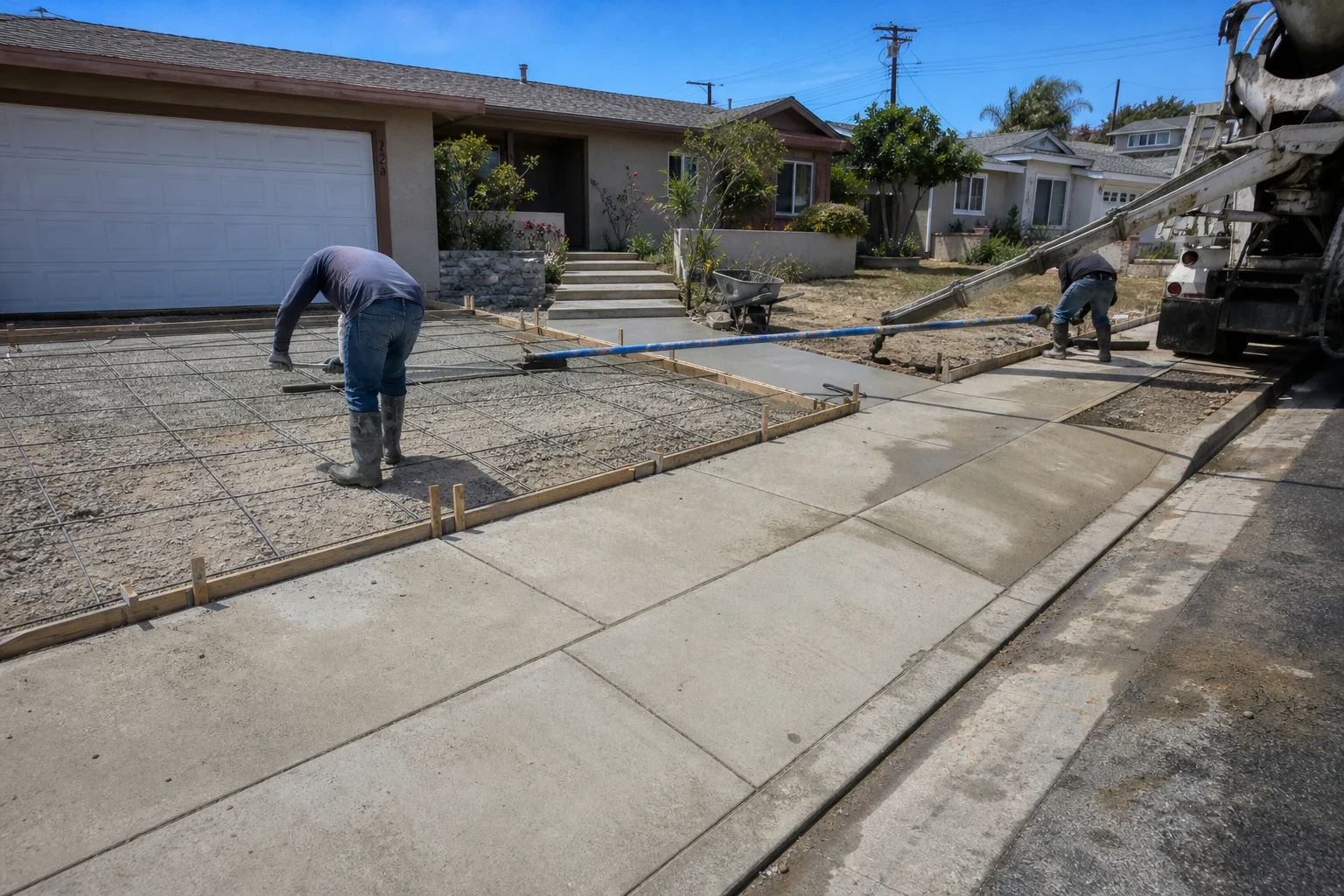
A Flat Slab That Stays Flat
A slab is the simplest thing we pour. It is also the one that shows a shortcut fastest. If the ground under it is soft or the base is thin, a corner drops, water sits, and whatever you set on it starts to lean.
Older yards tend to hide things. We find broken concrete buried as fill, old sprinkler lines, tree roots, and patches poured right over cracked slabs. Much of the soil in this area is clay that swells when wet and shrinks when dry, so we look at what is under the surface before we set forms.
A new slab makes sense when the old one is broken, sinking or too small, or when you need a flat spot where there is only dirt now. If you want a larger outdoor living space, our Patios and Concrete Backyards pages cover that work.
What the Slab Work Includes
- Tear-out and haul-away
- We break up the old slab, pull it out, and haul it off. That includes any buried chunks or old patches we find while digging.
- Subgrade check
- Once the old concrete is gone, we look at the soil. Soft spots, roots and wet clay get dug out and replaced before we go further.
- Compacted base
- We put down crushed rock and compact it in layers. This is what keeps the slab from settling later.
- Forms set for drainage
- We set forms so the finished slab sheds water away from your home and away from whatever sits on it.
- Steel and joints
- Rebar or wire goes in to suit the load, whether that is a hot tub or a lawn mower. We cut control joints so any cracking follows a straight line.
- Finish and cleanup
- You get a broom finish for grip, or a smoother finish for a shed floor. We clean up the site and leave the forms off once the slab has set.
Signs Your Old Slab Needs Replacing
One side has dropped
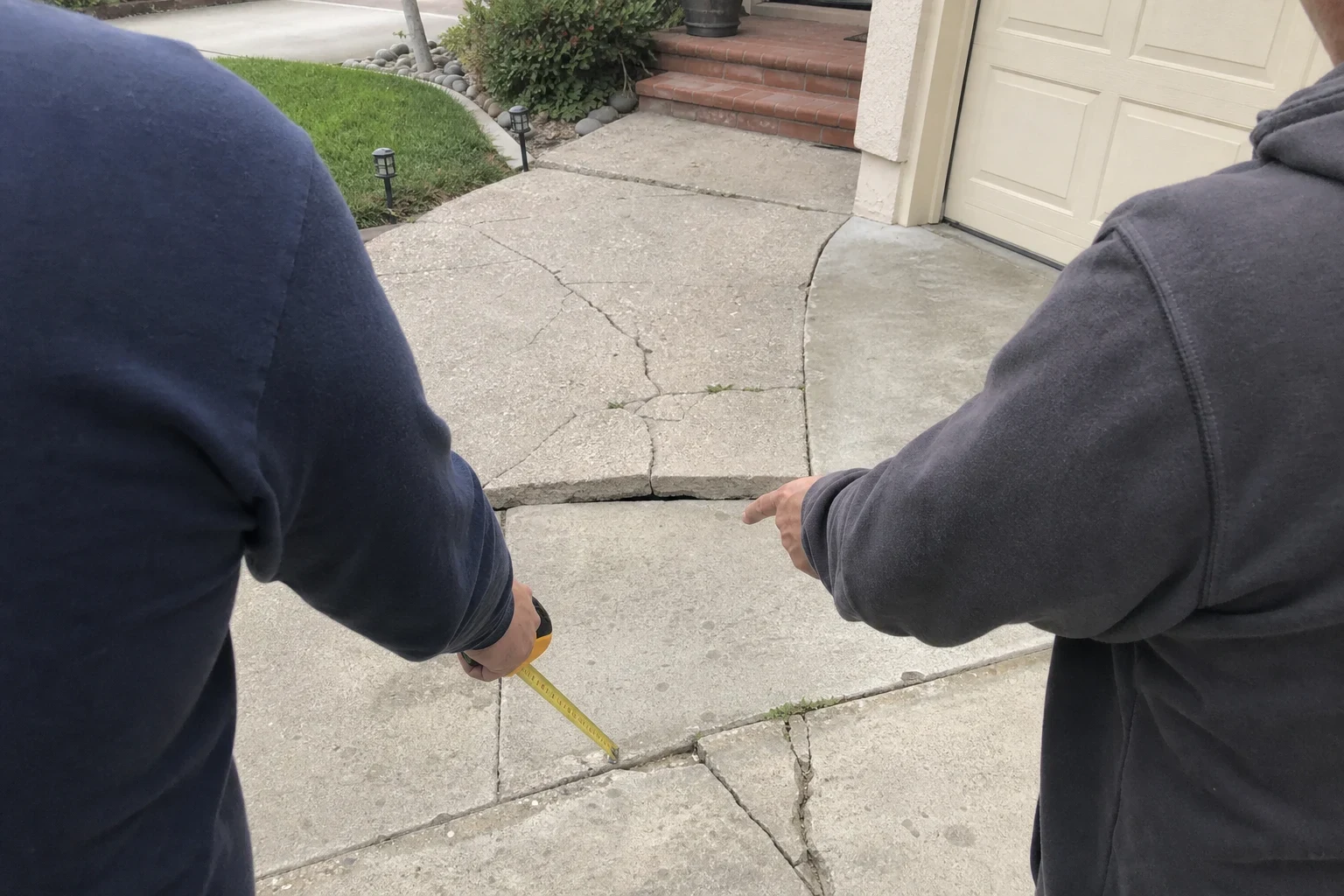
If a shed door now drags or a spa sits off level, the ground under the slab has moved. Patching the top will not fix a settled base.
Cracks with height difference
A hairline crack is normal. A crack where one side sits higher than the other means the slab has broken through.
Water pools on it
Puddles that sit after rain or watering point to a slab poured with no slope, or one that has sunk.
Layers of old patches
Past owners often poured thin concrete over a failing slab. Those layers flake, split and trap water underneath.
Roots pushing it up
A tree that was small when the house was built can lift a slab from below as it grows.
What Moves the Price of a Slab
Size is the starting point, but it is not the whole story. On older properties, what is already in the ground often moves the number more than the new concrete does. We walk through each part with you on the phone and again on site so you know what you are paying for.
Old concrete to remove
Thick slabs, slabs with steel inside, and layers of old patches take longer to break and cost more to haul away.
Soil and base work
Clay that needs to be dug out and replaced with rock adds labor and material. So does a yard that was filled with debris years ago.
Thickness and steel
A slab for a hot tub or heavy equipment gets thicker concrete and more rebar than one for trash cans.
Access
If the truck cannot reach the spot, we pump or wheelbarrow the concrete in. Narrow side yards and backyards behind a fence take more time.
Permits
Some slabs, like ones for spas or structures, may need a city permit. If yours does, the fees and inspection time are part of the job.
How a Slab Job Goes
- 1
Look and measure
We walk the spot with you, measure it, and ask what the slab will hold. Weight matters. A spa full of water needs more than a bike rack.
- 2
Demo and dig
We remove the old slab and dig to the right depth. If we find old pipe, roots or buried debris, we show you before we decide what to do about it.
- 3
Base and forms
Rock goes in and gets compacted. Forms and steel go in next, with slope checked before the truck shows up.
- 4
Pour and finish
We place the concrete, level it, and finish the surface. Joints get cut the same day or the next morning.
- 5
Curing time
Keep foot traffic off for about a day. Hold off on heavy items like a filled spa until the concrete has cured, and we will tell you when it is ready.
Slab Questions We Hear
Can you pour a new slab right over my old one?
Most of the time, no. Pouring over a cracked or sunk slab copies the problem into the new concrete. We take the old one out so we can see and fix what is underneath.
How thick will my slab be?
It depends on what goes on it. Light use like a trash can pad needs less than a spa or a shed full of tools. We set the thickness and steel based on the load you tell us about.
Will the slab crack?
Concrete can crack as it shrinks while curing. We cut control joints so any cracks follow straight lines instead of wandering across the surface. A good base keeps those cracks from opening up or shifting.
What happens if you find something buried during the dig?
We stop and show you. Old pipes, roots and buried concrete are common in older yards. We explain what it means for the slab and the cost before we keep going.
Do you work outside Laguna Niguel?
Yes. We pour slabs in nearby towns like Mission Viejo, Aliso Viejo, Laguna Hills and Dana Point. Our Service Areas page lists the rest.
Need a Slab Poured?
Tell us what it will hold and what is there now. We will ask a few questions about the ground and the old concrete, then set up a time to look at the spot.