ServicesPatios
Concrete Patios in Laguna Niguel
We pour new concrete patios behind homes that have seen a few owners and a few patch jobs. We remove the old slab and check what is under it. Then we fix the base and pour a patio that drains away from your house.
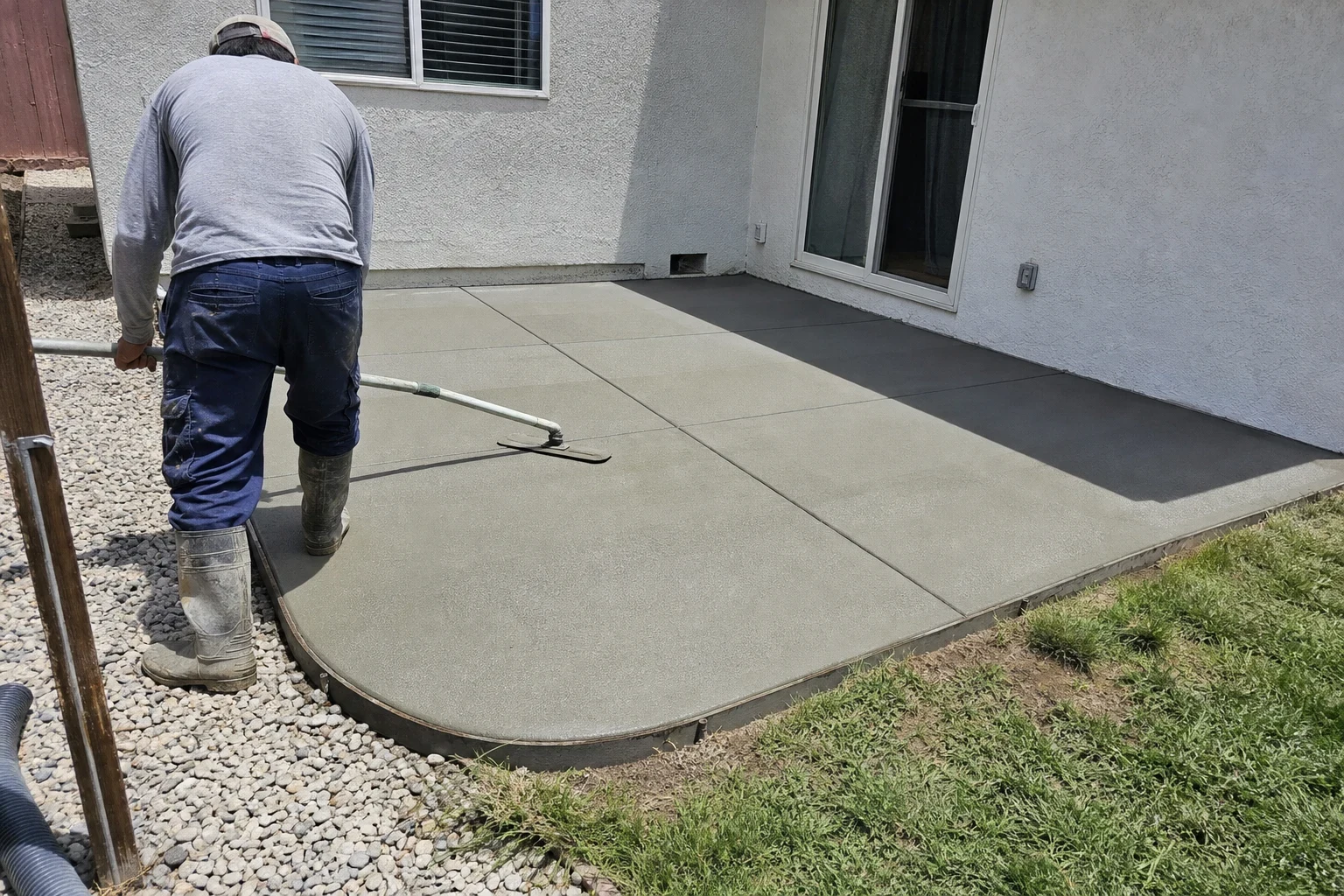
A new patio, starting with what is under the old one
A patio is a slab on the ground, next to your house. That sounds simple. On an older property it rarely is. We find patios poured over loose fill, patched with mismatched concrete, or laid flat so rain runs back toward the slider door.
We do new patio work, from a first patio off the back of the house to a full tear-out and replacement. We do not do patch or crack repair. If your slab is past saving, we replace it. If you are adding outdoor space, we build it from bare ground.
Many homes here were built in the 1970s and 1980s on clay soil that swells when wet and shrinks when dry. That movement is behind a lot of the heaved and broken patios we see. So we spend real time on the base before any concrete shows up.
What your patio job includes
- Tear-out and haul-off
- We break up the old slab, pavers or brick and haul all of it away. You are not left with a pile of rubble on the side yard.
- Base and compaction
- We dig out soft or organic soil and bring in crushed base rock. Then we compact it in layers so the slab sits on something firm.
- Slope and drainage
- We set the forms so water runs away from your house, not toward the foundation or door thresholds. Where an old drain line or downspout runs through the area, we plan around it before we pour.
- Steel reinforcement
- We place rebar or wire on chairs so it ends up inside the slab, where it does its job. A lot of older patios we remove had none at all.
- Control joints
- Concrete cracks as it shrinks. We cut or tool joints so it cracks in straight lines where we choose, not across the middle.
- Finish of your choice
- Broom finish, smooth trowel or a light salt finish. If you want a pattern or color, we also do stamped concrete.
Signs it is time for a new patio
Water pools near the house
After rain or sprinklers, water sits against the wall or by the door. The slab has settled or was never sloped right.
Sections have heaved or sunk
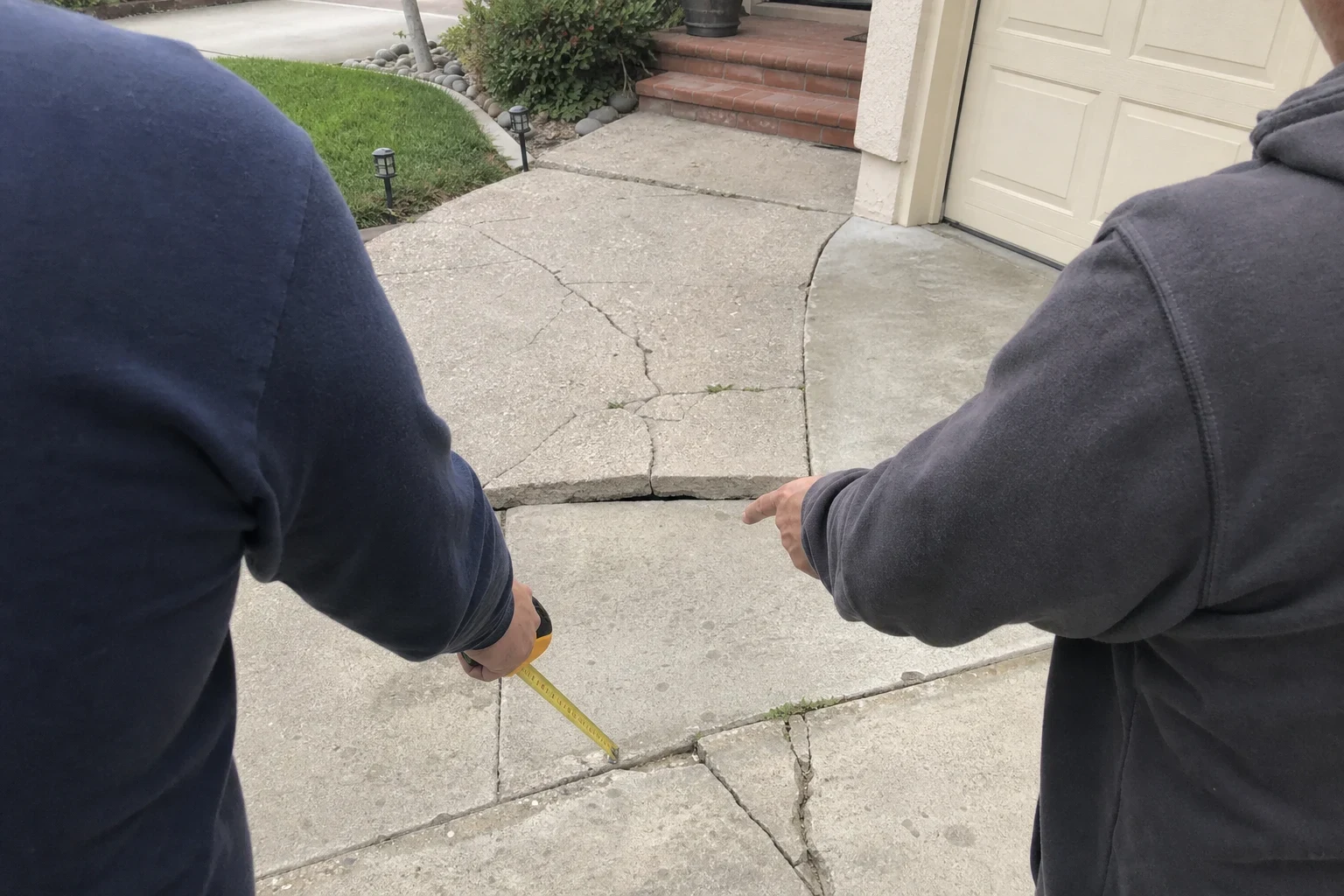
One slab sits higher than the next and someone trips on it. That usually means soil movement or roots underneath.
Patch on top of patch
You can see two or three colors of concrete from past fixes. Those patches tend to pop loose, and the slab under them is often in worse shape.
Wide, spreading cracks
Hairline cracks are normal. Cracks you can fit a coin in, that grow every year, mean the base has failed.
You need more room
The original patio is a small square by the slider. Extending it or replacing it with a bigger slab gives you space for a table and grill.
What moves the price of a patio
Every patio is priced from what we see at your home. Size matters, but on older properties what is under the old slab often matters just as much. We put each part on the estimate so you can see where the money goes.
Size and thickness
More square feet means more concrete, steel and labor. Thickness adds up too.
Tear-out
Removing an old slab costs more than starting on bare dirt. Thick slabs, or a second layer poured over an old one, take more time to break and haul.
Soil and base work
Soft fill, clay or old roots mean more digging and more base rock. We will not know the full story until the old patio is up, and we tell you that up front.
Access
If a truck can reach the backyard, the pour goes faster. Narrow side yards or hillside lots may need a pump or wheelbarrows.
Finish and shape
A plain broom finish is the simplest. Curves, steps down to the yard, color or stamping add labor.
How a patio job runs
- 1
Look at the site
We walk the yard with you, check slope, access and where water goes. We point out anything from past work that will affect the job, like buried old concrete or a drain line.
- 2
Written estimate
You get a line-item estimate that shows tear-out, base, concrete and finish. If something hidden turns up once the old slab is out, we show you and talk before we change anything.
- 3
Demo and prep
We remove the old patio, fix the soil, compact the base and set forms and steel. We cover nearby walls, plants and doors to keep concrete off them.
- 4
Pour and finish
Pour day is usually one day. We place, level and finish the concrete, then cut the joints.
- 5
Cure and clean up
We clean the site and haul off our debris. You can walk on the patio in a day or two and set furniture on it in about a week.
Patio questions we hear
Can you just pour new concrete over my old patio?
Sometimes people ask for that, and we usually advise against it. It raises the height at your door and keeps whatever problem made the old slab fail. In most cases tearing it out and fixing the base gives you a patio that lasts much longer.
How long until I can use my patio?
Light foot traffic is fine after a day or two. Wait about a week before heavy furniture or a grill, and longer before anything with real weight. We will give you specific timing for your job.
Will my new patio crack?
Concrete shrinks as it cures, so some small cracks are normal. Good base work, steel and well-placed control joints keep cracks in the joints and keep the slab from breaking apart.
Do I need a permit for a patio?
A simple slab on grade often does not need one, but it depends on the job, like a cover, steps or work near a property line. If yours needs a permit, we tell you during the estimate and handle it.
Can the new patio match my house?
We can do a plain gray slab, add color, or pour stamped concrete that looks like stone. We can also tie the patio into walkways and sidewalks so the yard looks like one project.
Ready to replace that old patio?
Tell us what is out back now and what you want there. We will set a time to look at it and walk you through the job.